In a recent interview, President Trump discussed various topics, including nuclear testing by Russia and China, immigration control, and criticised former President Barack Obama. He also blamed Democrats for the ongoing government shutdown and rejected calls for compromise.
Trump
US President Donald Trump appeared on CBS News’ 60 Minutes, marking his first interview since he settled a lawsuit against the news portal months ago.
Before the 2020 elections, Trump had walked out of a 60 Minutes interview, alleging bias and later filed a lawsuit against the publication over an interview with Kamala Harris.
CBS News interview
In the recent CBS News interview, Trump discussed the India and Pakistan conflict, nuclear testing by Russia and China, criticised former US President Barack Obama, and claimed success in halting illegal immigration. He also addressed the government shutdown, blaming Democrats, and refused to negotiate, insisting Republicans need to be tougher.

- Tariffs as geopolitical leverage
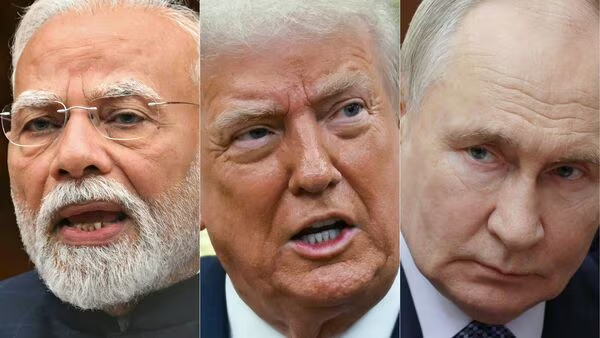
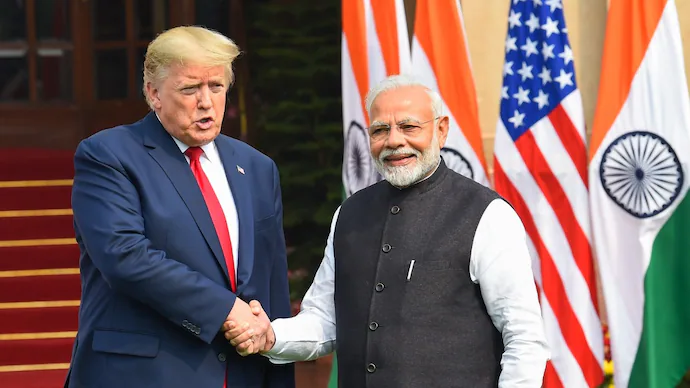
He claimed to have threatened both India and Pakistan with 250% tariffs on bilateral trade, saying the U.S. would “not do business with you” if the hostilities continued.
The implication: economic tools as a substitute for military engagement in crisis scenarios. - India-Pakistan crisis prevention claim
Trump asserted that he played a decisive role in preventing a full-blown war between India and Pakistan this year, warning of a “nuclear war” scenario unless trade and tariffs were used as leverage.
India has, however, denied U.S. mediation, maintaining the cease-fire was reached independently. - Resumption of U.S. nuclear testing on the table
Trump announced that the U.S. intends to resume nuclear weapons testing breaking a 30+ year moratorium to match alleged Russian and Chinese tests.
This signals a major shift in U.S. deterrence posture, and raises alarms about a revived global arms race. - China and Russia in focus
Trump’s remarks place both China and Russia at the centre of his global-tension narrative: he claimed they are engaged in secret nuclear tests or accelerated weapons build-up, prompting U.S. response. - Mixed messages on military support to allies
While promoting strong rhetoric, Trump also signalled restraint: for example, ruling out the supply of long-range Tomahawk missiles to Ukraine despite the Pentagon’s approval because he fears escalation.
This suggests the U.S. remains hesitant to trigger direct proxy war escalations. - India-Pakistan narrative contested
Though Trump claims credit for brokering de-escalation, Indian officials reject the assertion and say they alone decided on the pause in hostilities.
The competing narratives reflect mistrust of external mediation in South Asia. - Escalation risk in nuclear-armed South Asia
The India-Pakistan conflict earlier this year saw drone strikes, fighter jet engagements, and both sides brushing close to greater escalation. The region remains especially volatile given nuclear capabilities.
Trump’s rhetoric underscores how regional crises can have global implications. - Global arms-control norms under pressure
By signalling U.S. resumption of nuclear tests, Trump is challenging long-standing arms-control norms like the Comprehensive Nuclear‑Test‑Ban Treaty (CTBT) framework even though the U.S. never ratified it.
Observers warn this may trigger reciprocal moves by rivals and accelerate proliferation. - Strategic ambiguity and recalibration
Trump continues to use a mix of strong rhetorical signals (tariffs, testing) and ambiguous military commitments (refusing Tomahawks) suggesting a recalibration rather than a hard pivot in U.S. foreign policy.
This ambiguity may be deliberate: strong deterrence posture without full-scale intervention. - Messaging for a global audience
Trump’s comments are not just aimed at the U.S. electorate they appear designed for global consumption: emphasising U.S. strength, willingness to act, but also upgrading bargaining tools (e.g., tariffs, trade) in geopolitics.
The broad scope from South Asia to Sino-Russian dynamics indicates an attempt to frame the U.S. as a central actor in multiple theatres of tension.