India has significantly increased its crude oil imports from the United States
Bharat has significantly increased its crude oil imports from the United States, reaching levels not seen since 2022, as the country seeks to balance its energy needs, manage diplomatic relations, and secure economic advantages. This strategic shift comes amid mounting pressure from the US government and a complicated global oil market that has been disrupted by sanctions on Russia and volatile prices
US Crude Imports: New HighsIn October 2025, Bharat crude oil imports from the US surged to about 540,000–575,000 barrels per day, marking a remarkable rise from the 2025 year-to-date average of around 300,000 barrels per day. According to market intelligence firm Kpler, this jump represents a three-year high for US crude shipments to India. The growth was motivated by several economic factors: a favorable price difference between Brent and WTI (the two main oil benchmarks), muted demands from other major importers like China, and advantageous pricing for US WTI Midland oil that made it a cost-effective choice for Indian refiners.
India`s top Russian Crude Suppliers
India’s import of US crude oil is not only a response to immediate diplomatic and economic stimuli but also a signal of longer-term changes in its global energy sourcing. Projections indicate that US crude imports could close October 2025 at around 575,000 barrels per day, an almost double increase over the year’s previous average. Analysts highlight that this surge has also come at a time when Chinese demand for US oil is low, giving Indian refiners a rare pricing edge. Despite Russia maintaining its top supplier position, tightening Western sanctions are forcing Indian oil companies, including leaders like Reliance Industries, to recalibrate supply lines and build stronger ties with countries outside Russia to minimize risks and ensure uninterrupted supply for the world’s third-largest oil consumer


Easing Trade Tensions under Trump
This trend coincides with a period of easing trade tensions between New Delhi and Washington. President Trump’s administration recently imposed high tariffs on Indian exports, partly as retaliation for India’s continued purchases of Russian oil. In response, India’s move to increase US energy imports is viewed as a gesture to reduce the bilateral trade deficit and demonstrate goodwill in ongoing trade talks.
Diversification Away from Russian Oil
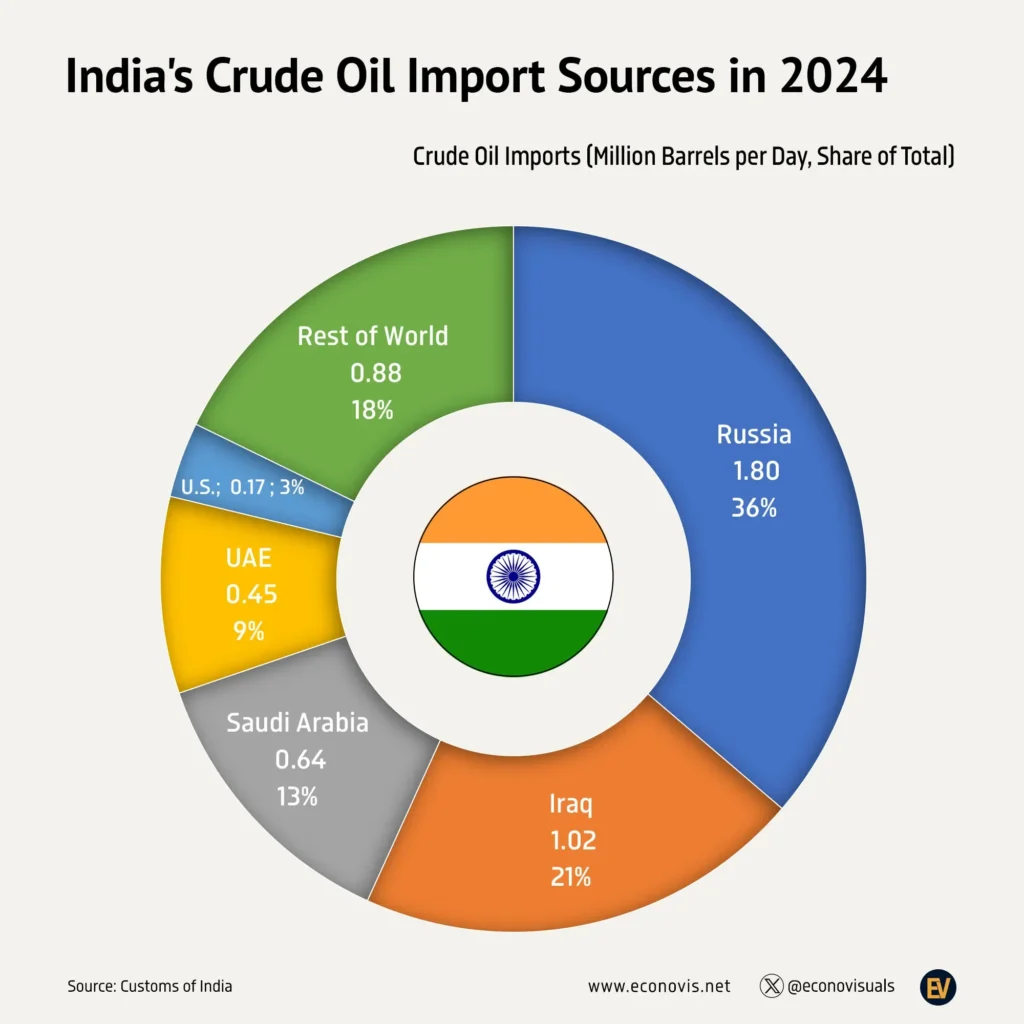
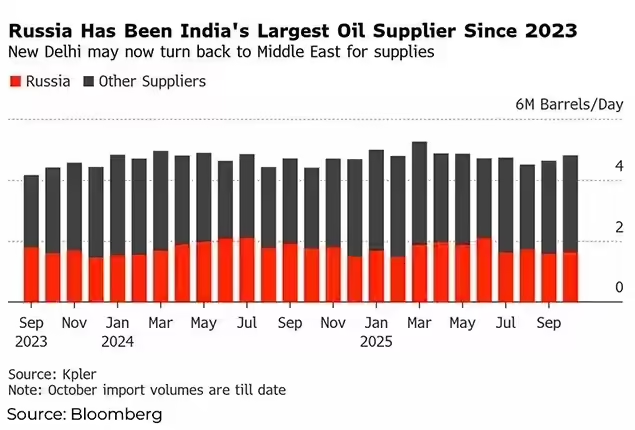
Since the onset of the Ukraine war and the resulting Western sanctions on Russia, Bharat has become a major buyer of discounted Russian crude oil. In September 2025,
Bharat imported about 1.6 million barrels per day of Russian oil, making Russia its largest oil supplier. However, recent US sanctions have targeted leading Russian oil companies, complicating transactions and increasing risks for Indian refiners, especially industry giant Reliance Industries.While Bharat has not committed to a full halt in Russian oil imports, the government and major refiners are recalibrating their strategies to avoid being caught up in secondary sanctions

These moves also offer New Delhi greater bargaining power in upcoming trade negotiations with the US, providing diplomatic breathing space without immediately sacrificing its flexibility to import affordable oil from Russia when conditions allow
Energy Security and Strategic Autonomy
India’s strategy remains focused on maintaining energy security and strategic autonomy. Policymakers are keen to avoid overdependent relationships with any single supplier. By broadening its supplier base to include more US crude, as well as exploring options in the Middle East, Bharat is better positioned to handle supply disruptions and price volatility in the global oil market
Despite the current surge, analysts suggest the diversification is opportunistic, driven by short-term economic conditions and diplomatic considerations rather than a long-term structural shift. Russian oil is still expected to play a significant role in India’s energy mix for the foreseeable future, though refining contracts and import volumes may fluctuate based on international pressures and future sanctions.